
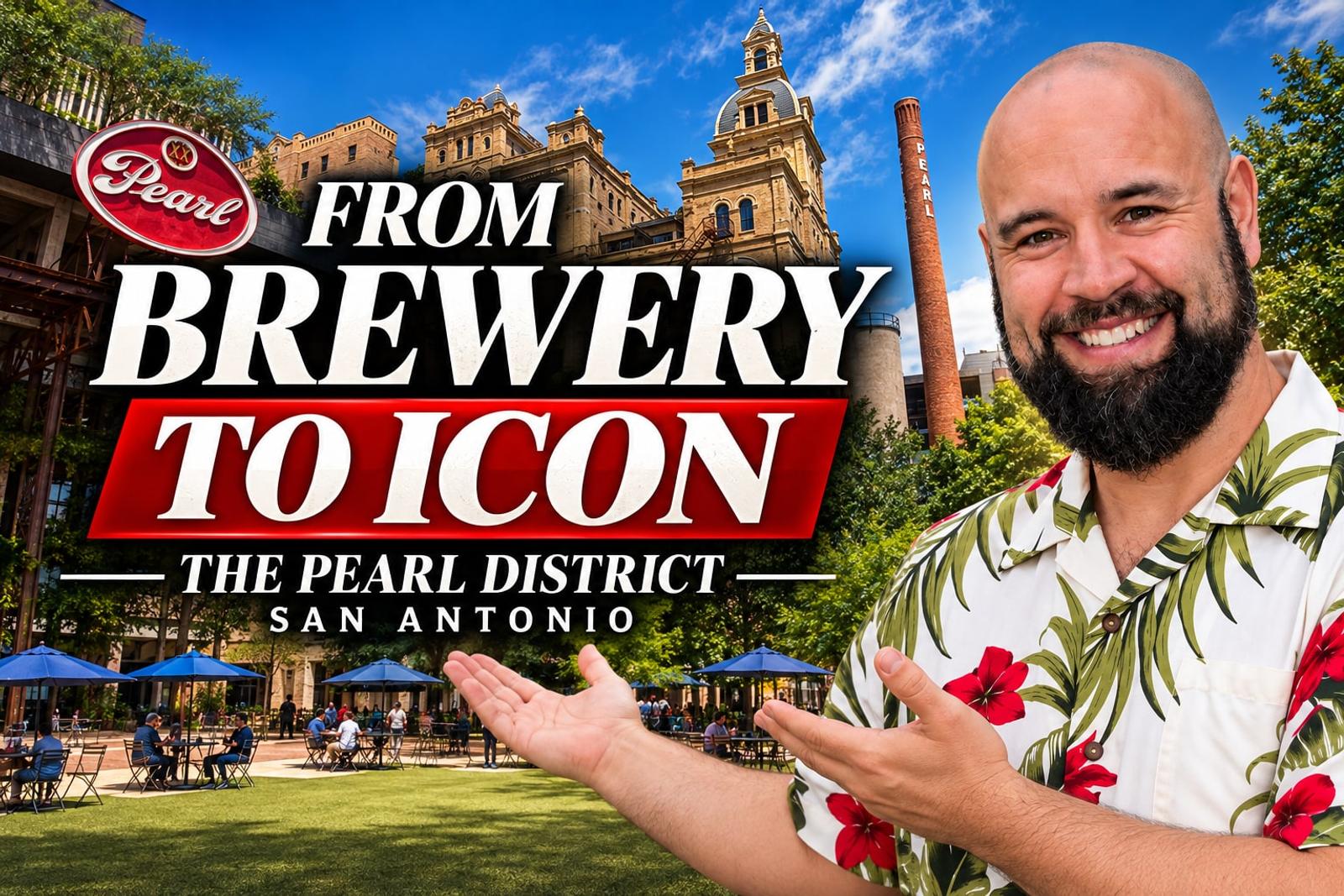
In 1918, with Prohibition looming and her husband Otto Koehler freshly dead from a gunshot wound fired by one of his two mistresses, Emma Koehler took over the Pearl Brewing Company. She was 50 years old, had no formal business training, and was now running one of Texas's largest breweries at the worst possible moment in American brewing history. She not only kept the company alive through 13 dry years, she positioned it to outlast Prohibition entirely. Most San Antonio residents who visit the Pearl District today have no idea that a woman steered the place through its hardest chapter.
That gap between what the Pearl is now and what people know about where it came from is worth closing. Pearl District San Antonio history runs deeper than the weekend farmers market and the Hotel Emma, and understanding it changes how you see the whole neighborhood.
The Brewery That Built Itself on a Limestone Bluff
Frederich Stumpf founded the San Antonio Brewing Association in 1883 on a site just north of downtown, on a rise above the San Antonio River. The location was practical: the limestone geology offered natural cold storage in underground cellars, and the river provided water. Stumpf hired a Munich-trained brewmaster and started producing lager for the thirsty German immigrant community spreading out along the river.
Otto Koehler and his business partner Otto Wahrmund bought the brewery in 1883, the same year it opened. Koehler renamed the flagship beer Pearl, reportedly after the pearl-like bubbles that rose in a freshly poured glass. By the early 1900s, Pearl was distributing across Texas and into Mexico. The campus on North St. Mary's Street had grown into a full industrial complex: brewhouse, bottling works, stables, an ice plant, and housing for workers.
Then came the double blow of Prohibition in 1920. Otto Koehler was already dead. Emma stepped in and pivoted the operation to near-beer, ice, and malt syrup production. It kept hundreds of employees working. When Prohibition ended in 1933, Pearl was one of the few Texas breweries positioned to resume full production immediately. Emma Koehler ran the company until her death in 1945. The San Antonio Conservation Society later recognized her as a central figure in the city's preservation and business history.
Decline, Near-Demolition, and a Different Kind of Rescue
Pearl Brewing Company continued operating through the second half of the 20th century, but the regional brewery model was dying. National brands with massive distribution networks squeezed out local players. Pearl went through a series of corporate sales. By the 1990s, production had dropped sharply. The brewery formally closed in 2001.
At that point, the site had what developers typically consider liabilities: aging industrial buildings, underground tanks, environmental remediation requirements, and a location that wasn't yet part of anyone's mental map of desirable San Antonio real estate. Demolition was a real possibility. Several proposals floated through the early 2000s that would have cleared the campus for conventional commercial development.
Silver Ventures, the private investment firm that purchased the property, chose a different path. Rather than scrape the site, they committed to preserving the original structures and weaving them into a mixed-use development. The brewhouse became the Hotel Emma. The old Pearl stable became event space. The 1894 water tower still stands on the campus. That decision to preserve rather than demolish is what separates the Pearl from dozens of similar industrial sites across the Sun Belt that became generic retail parks.
The project succeeded for a specific reason most people overlook: Silver Ventures treated the history as the product, not as an obstacle. The rough limestone walls, the original copper kettles behind glass at the Hotel Emma bar, the industrial ceiling heights — none of that was an accident. Visitors pay more to be in a place with that texture than they would in a building that could be anywhere.
Pearl District San Antonio History and What It Means for the City Now
The Pearl is now the clearest local example of a principle that urban planners argue about constantly: historic preservation generates economic return. Property values in the surrounding Museum Reach corridor rose substantially after the Pearl redevelopment opened. The San Antonio River improvements connecting the Pearl to downtown through the Museum Reach extension, completed in 2009, reinforced that effect by creating a continuous pedestrian and kayak corridor.
The surrounding blocks are still changing. New residential buildings, restaurant groups, and office tenants have located near the Pearl precisely because of the foot traffic and identity the original campus created. That momentum started with a decision not to demolish a brewery that had stopped making beer.
For anyone thinking about San Antonio neighborhoods, that origin story matters. The Pearl is not valuable because it was built new. It's valuable because someone recognized what was already there.
If you want to understand how San Antonio's urban core is evolving, the Option One Real Estate blog covers the neighborhoods and market shifts that matter to buyers and owners across the region.
Frequently Asked Questions
When was the Pearl Brewing Company founded in San Antonio?
The San Antonio Brewing Association, which became Pearl Brewing Company, was established in 1883 on a site along the San Antonio River north of downtown. Otto Koehler and his partner Otto Wahrmund acquired the brewery that same founding year, and Koehler named the flagship lager Pearl.
Who was Emma Koehler and what did she do at the Pearl Brewery?
Emma Koehler was the wife of brewery owner Otto Koehler. After his death in 1914, she took control of the company and ran it through Prohibition from 1920 to 1933 by converting production to legal alternatives like near-beer and malt syrup. Her management kept the workforce largely intact and left the company positioned to resume full brewing when Prohibition ended.
Who redeveloped the Pearl District and when did it open?
Silver Ventures, a San Antonio-based private investment firm, purchased the former brewery campus after it closed in 2001 and led the adaptive reuse redevelopment. The first phases opened in the late 2000s, with the Hotel Emma, the weekend farmers market, and the full retail and restaurant campus coming together through the early 2010s. The project is widely cited as one of the strongest examples of industrial adaptive reuse in the American South.
Sources
• San Antonio Conservation Society
Related reading
• Historic Landmarks Worth Knowing in Fair Oaks Ranch
• San Antonio's 32 Historic Districts: What Homeowners and Buyers Need to Know Before Buying In
• Hosting Thanksgiving in San Antonio: Driveway Flow and Guest Comfort
This article was first published on the Option One Real Estate blog on November 14, 2026. It is general information, not legal, tax or lending advice.